Mushroom coffee has moved from being a wellness curiosity to a daily ritual for many people. But what exactly is it, and why are more and more coffee drinkers choosing to swap their regular brew for one infused with functional mushrooms? Let’s explore the most common questions.
What is Mushroom Coffee?
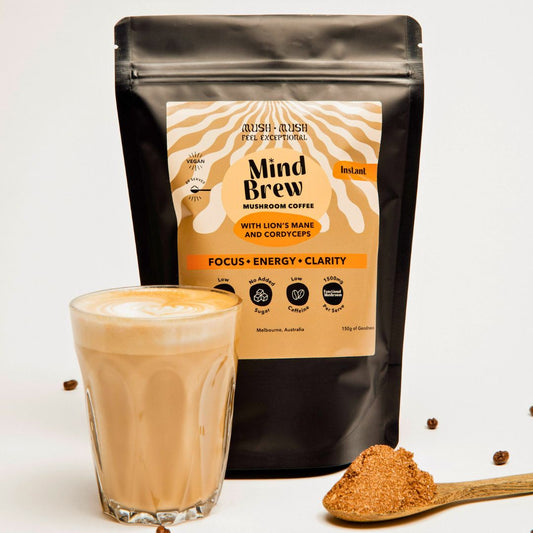
Mushroom coffee is coffee blended with functional mushroom extracts such as Lion’s Mane, Cordyceps, Reishi, or Chaga. These are not the same mushrooms you cook with for dinner. Functional mushrooms are rich in compounds like beta-glucans, triterpenes, and antioxidants that support brain health, energy, and immunity. In blends like Mush Mush Mind Brew, you get the flavour of smooth Arabica coffee with added mushroom extracts, creating a drink that is both familiar and functional.
Does Mushroom Coffee Still Contain Caffeine?
Yes, mushroom coffee still contains caffeine, but usually at a lower level compared to standard coffee. For example, Mind Brew is made with Brazilian Arabica beans and has about half the caffeine of a regular cup. This means you still enjoy the ritual and alertness of coffee, but without the sharp spikes or afternoon crashes.

How Does Mushroom Coffee Help with Focus?
Lion’s Mane mushroom is one of the most studied mushrooms for cognitive health. It supports the production of nerve growth factor (NGF), which helps protect and regenerate neurons in the brain. When paired with a gentle dose of caffeine, Lion’s Mane can improve concentration, memory, and productivity. This makes mushroom coffee especially appealing for people with ADHD or those who want steady mental clarity through the day.
Can Mushroom Coffee Boost Physical Energy?
Yes. Cordyceps, often included in mushroom coffee blends, has been shown to support the body’s production of ATP, which is the primary source of energy for your cells. This can help with stamina, exercise performance, and day-to-day energy without needing multiple cups of coffee.
Does Mushroom Coffee Support Immunity?
Many mushroom coffee blends include Chaga or Turkey Tail, both rich in beta-glucans that help regulate immune function. These compounds strengthen the body’s natural defences and provide antioxidant protection. This means mushroom coffee is doing more than waking you up in the morning. It is also helping to keep your immune system strong.
Is Mushroom Coffee Good for Stress and Sleep?
Mushroom coffee is energising, but some blends also include Reishi, a mushroom known for its calming properties. Reishi contains triterpenes that support relaxation and help balance the nervous system. Drinking a blend with Reishi earlier in the day can ease stress levels while still supporting focus.

Why Choose Mushroom Coffee Over Regular Coffee?
The biggest difference is balance. Regular coffee gives you a quick surge of energy, often followed by a crash. Mushroom coffee smooths out that experience by combining caffeine with adaptogens. Instead of jitters, you get steady focus, a calm state of mind, and long-term benefits such as brain support, immune protection, and reduced inflammation.
How Can Beginners Start with Mushroom Coffee?
The easiest way to start is with a ready-made blend like Mind Brew. All you need to do is add hot water or milk, stir, and enjoy. For beginners, this is a simple and enjoyable way to explore functional mushrooms while keeping your daily routine exactly the same.
The Round Up!
Mushroom coffee is more than a substitute for your daily latte. By blending caffeine with functional mushrooms such as Lion’s Mane, Cordyceps, Chaga, and Reishi, it delivers focus, lasting energy, immune support, and a calmer start to the day. It is coffee with extra benefits.
References
-
Mori, K., Inatomi, S., Ouchi, K., Azumi, Y., & Tuchida, T. (2009). Improving effects of the mushroom Yamabushitake (Hericium erinaceus) on mild cognitive impairment. Phytotherapy Research, 23(3), 367–372.
-
Chen, S., & Xu, J. (2013). Cordyceps militaris: A review of its chemical constituents and pharmacological properties. Phytotherapy Research, 27(6), 795–801.
-
Wasser, S. P. (2011). Current findings, future trends, and unsolved problems in studies of medicinal mushrooms. Applied Microbiology and Biotechnology, 89(5), 1323–1332.
-
Vetvicka, V., Vannucci, L., & Sima, P. (2019). Beta-glucan: Supplement or drug? From laboratory to clinical trials. Molecules, 24(7), 1251.
-
Gao, Y., Zhou, S., Chen, G., Dai, X., & Xu, G. (2002). A phase I/II study of Ling Zhi mushroom Ganoderma lucidum in patients with advanced cancer. International Journal of Medicinal Mushrooms, 4(3), 207–214.