Walk into almost any health food store or browse social media, and chances are you've come across mushroom coffee.
Some people swear it's helped them ditch their second or third coffee. Others say it gives them steadier energy, better focus, and fewer jitters. Then there are the sceptics wondering if it's simply another wellness trend with clever marketing behind it.
So, what's the truth?
The answer lies somewhere in the middle.
Mushroom coffee isn't magic, and it won't instantly transform your health overnight. But it also isn't just regular coffee with a trendy label. Quality mushroom coffee combines coffee with functional mushroom extracts that have been used for centuries in traditional wellness practices and are now being studied by modern science for their potential to support cognitive function, stress resilience, immune health, and overall wellbeing.[1]
As mushroom coffee continues to grow in popularity across Australia, there's also more misinformation than ever. Some products contain meaningful amounts of mushroom extracts, while others include very little. Some use high-quality fruiting body extracts, while others rely on cheaper ingredients that may not offer the same nutritional profile.
In this guide, we'll answer the questions Australians are asking most about mushroom coffee, explain how it works, explore what the research says, and help you understand what to look for when choosing a quality product.
Whether you're simply curious or considering making the switch, here's everything you need to know.

What is mushroom coffee?
Despite its name, mushroom coffee doesn't taste like mushrooms.
It's simply coffee that has been blended with extracts from functional mushrooms, also known as medicinal mushrooms. These are completely different from the mushrooms you might cook with at dinner or the psychedelic mushrooms often discussed in the media.
Functional mushrooms have been used for thousands of years in traditional Chinese medicine, Japanese herbal practices, and other wellness systems throughout Asia. Today, they're commonly consumed as powders, capsules, teas, tinctures, and increasingly, coffee.[2]
The goal isn't to replace coffee altogether.
Instead, mushroom coffee combines the familiar flavour and ritual of coffee with compounds naturally found in medicinal mushrooms, creating a beverage that offers both caffeine and functional ingredients.
Common mushrooms found in mushroom coffee include:
- Lion's Mane
- Cordyceps
- Reishi
- Chaga
- Turkey Tail
Each mushroom has its own unique profile and has traditionally been used for different purposes, which we'll explore later in this guide.
Are the mushrooms fresh mushrooms?
No.
Quality mushroom coffee doesn't contain chopped-up mushrooms mixed into your coffee.
Instead, manufacturers use concentrated mushroom extracts made from carefully dried mushrooms. These extracts concentrate naturally occurring compounds, making them easier to incorporate into beverages while improving absorption.[3]
The extraction process also removes much of the woody fibre that would otherwise make mushrooms difficult to digest.
This is why you'll often see terms like dual extracted or hot water extracted on premium mushroom products.

What are functional mushrooms?
Functional mushrooms are mushrooms that contain naturally occurring compounds which may support various aspects of health and wellbeing.
Among the most studied are compounds called beta-glucans.
Beta-glucans are complex polysaccharides found in mushroom cell walls. Rather than acting like caffeine or vitamins, they interact with immune cells and have been widely studied for their role in supporting healthy immune function and overall resilience.[4]
Different mushrooms also contain their own unique compounds.
For example:
- Lion's Mane contains hericenones and erinacines.
- Reishi contains triterpenes.
- Cordyceps contains cordycepin.
- Chaga contains antioxidant compounds including polyphenols.
This is why different mushrooms are often selected for different wellness goals.
Does mushroom coffee actually work?
This is probably the biggest question people ask.
The honest answer is yes, but not in the way many people expect.
If you're expecting to drink one cup and suddenly feel superhuman, you'll probably be disappointed.
Mushroom coffee isn't designed to create dramatic effects.
Instead, it combines two different mechanisms.
First, there's the coffee itself.
Coffee provides caffeine, which temporarily blocks adenosine receptors in the brain. Adenosine is a neurotransmitter that builds up throughout the day and contributes to feelings of tiredness. By blocking adenosine, caffeine temporarily increases alertness and wakefulness.[5]
The second component is the mushroom extracts.
Unlike caffeine, medicinal mushrooms don't provide an immediate "kick". Their benefits are generally associated with consistent daily use as part of an overall healthy lifestyle.
Research into mushrooms such as Lion's Mane, Reishi and Cordyceps continues to grow, although many studies are still emerging and further human research is needed.[6]
In other words, mushroom coffee shouldn't be viewed as a miracle product.
Think of it as a different way to enjoy your morning coffee while incorporating functional mushroom extracts into your daily routine.

Why are so many Australians switching to mushroom coffee?
Coffee culture is deeply embedded in Australia.
We love our flat whites, long blacks and cappuccinos.
But many Australians are also looking for ways to reduce the downsides that can sometimes come with drinking several coffees every day.
Common reasons people explore mushroom coffee include:
- Wanting steadier energy throughout the day.
- Reducing caffeine intake without giving up coffee completely.
- Experiencing coffee jitters or anxiety.
- Feeling tired after their morning coffee wears off.
- Looking for ways to support focus while working or studying.
- Building healthier daily rituals.
Many mushroom coffee products also contain less caffeine than a standard cup of coffee, making them appealing for people who enjoy coffee but feel sensitive to higher caffeine levels.
What are the benefits of mushroom coffee?
The exact benefits depend on the mushrooms used and the formulation itself.
However, here are some of the reasons people choose mushroom coffee.
Steadier energy
Many mushroom coffee blends contain less caffeine than regular coffee.
While lower caffeine doesn't necessarily mean more energy, it can help some people avoid the rapid peaks and crashes associated with consuming large amounts of caffeine throughout the day.
Some blends also include Cordyceps, a mushroom traditionally used to support stamina and energy production.
Rather than relying solely on increasing caffeine intake, many people prefer a more balanced approach to maintaining energy.
Better focus
One of the biggest reasons people choose mushroom coffee is to support concentration.
Lion's Mane has become particularly popular because researchers are investigating compounds within the mushroom that may support nerve growth factor (NGF), a protein involved in maintaining healthy neurons.[7]
Although research is ongoing, this has made Lion's Mane one of the most recognised functional mushrooms for cognitive health.
Many people simply describe the experience as feeling focused without feeling overstimulated.
Fewer coffee jitters
Anyone who's accidentally had one coffee too many knows the feeling.
Racing thoughts.
Shaky hands.
Feeling wired but not necessarily productive.
These effects usually come from consuming more caffeine than your body comfortably tolerates.
Because many mushroom coffees contain less caffeine than regular coffee, some people find they experience fewer jitters while still enjoying the ritual of coffee.
Some formulations also include ingredients like L-theanine, an amino acid naturally found in green tea that has been studied alongside caffeine for its effects on attention and alertness.[8]
A healthier morning ritual
Sometimes the biggest benefit isn't physiological.
It's behavioural.
Replacing multiple takeaway coffees with one intentional morning ritual can encourage healthier habits.
Whether that's taking five minutes to slow down before work, enjoying breakfast instead of skipping it, or simply reducing caffeine intake, these small daily rituals often have a much bigger impact than people realise.

What mushrooms are commonly found in mushroom coffee?
Not every mushroom coffee contains the same ingredients.
Here's a closer look at the five mushrooms you're most likely to encounter.
Lion's Mane
Lion's Mane (Hericium erinaceus) has become one of the most popular functional mushrooms worldwide.
It has traditionally been used in East Asian cultures and is now widely researched for its relationship with brain health, cognitive function and nerve growth factor.[7]
You'll often find Lion's Mane in mushroom coffees designed to support focus and productivity.
Cordyceps
Cordyceps has a long history of use as a vitality mushroom.
Modern research has explored its relationship with cellular energy production, exercise performance and fatigue, although more human studies are still needed.[9]
Because of this, Cordyceps is commonly included in blends aimed at supporting daytime energy.
Reishi
Often called the "Mushroom of Immortality," Reishi has traditionally been associated with relaxation, resilience and recovery.
Rather than being included for energy, Reishi is more commonly found in evening blends or products focused on stress support and overall wellbeing.[10]
Chaga
Chaga is best known for its high antioxidant content.
Antioxidants help protect cells from oxidative stress caused by normal metabolism and environmental factors.[11]
Its earthy flavour also complements coffee surprisingly well.
Turkey Tail
Turkey Tail has become one of the most researched medicinal mushrooms because of its naturally occurring beta-glucans and its relationship with immune health.[12]
While less common than Lion's Mane or Cordyceps in coffee products, it still appears in some functional blends.

Does mushroom coffee taste like mushrooms?
This is easily one of the biggest misconceptions about mushroom coffee.
The short answer?
No. At least, it shouldn't.
A well-made mushroom coffee should taste like... coffee.
If you've ever been hesitant to try mushroom coffee because you imagine it tasting like button mushrooms or mushroom soup, you're certainly not alone. Fortunately, that's not how functional mushroom extracts behave.
During the extraction process, much of the earthy, woody flavour associated with whole mushrooms is removed, leaving behind concentrated bioactive compounds rather than the strong mushroom taste itself.[13]
The final flavour depends on several factors, including:
- The quality of the coffee beans.
- The roast profile.
- The ratio of coffee to mushroom extracts.
- Whether ingredients such as MCT or coconut milk powder have been added.
Some blends have a slightly earthier finish than regular coffee, but most people describe the flavour as smooth, rich and very similar to a traditional instant coffee or espresso.
If you're switching from a high-quality specialty coffee, you may notice some differences. But if you're coming from instant coffee or café coffee with milk, the transition is often surprisingly easy.
Is mushroom coffee lower in caffeine?
Usually, yes.
Most mushroom coffees contain less caffeine than a standard cup of coffee, although the exact amount varies between brands.
As a general guide:
| Drink | Approximate caffeine |
|---|---|
| Espresso | 60–80 mg |
| Flat White | 120–160 mg |
| Instant Coffee | 70–100 mg |
| Matcha | 35–70 mg |
| Mushroom Coffee | 50–100 mg |
Because there isn't a universal recipe, it's always worth checking the label.
Some brands reduce the coffee content to make room for mushroom extracts, while others simply add mushrooms to a full-strength coffee.
If you're looking to reduce your caffeine intake without giving up coffee altogether, mushroom coffee can be a practical middle ground.

Mushroom coffee vs regular coffee
Both drinks contain coffee.
The biggest difference is what comes alongside it.
| Regular Coffee | Mushroom Coffee |
|---|---|
| Coffee only | Coffee plus functional mushroom extracts |
| Usually higher caffeine | Often moderate caffeine |
| Energy mainly from caffeine | Caffeine plus mushroom extracts |
| Minimal additional functional ingredients | May include mushrooms, MCT or L-theanine |
| Familiar flavour | Similar flavour with slight variations depending on the blend |
Neither is objectively "better."
It comes down to your goals.
If you simply enjoy the taste and ritual of coffee, regular coffee may suit you perfectly.
If you're interested in combining coffee with functional mushroom extracts while potentially moderating your caffeine intake, mushroom coffee may be worth exploring.
How long does mushroom coffee take to work?
The answer depends on which part of the drink you're referring to.
The caffeine works quickly.
Most people notice increased alertness within 20 to 45 minutes of drinking coffee.[14]
The mushroom extracts are different.
Unlike caffeine, medicinal mushrooms aren't intended to create an immediate sensation.
Instead, they're generally consumed consistently over weeks or months as part of a daily wellness routine.
Many people report noticing gradual changes over time rather than a dramatic difference after a single cup.
This is similar to many other nutritional habits.
One healthy breakfast won't transform your health overnight, but consistently making healthier choices can contribute to long-term wellbeing.

Can you drink mushroom coffee every day?
For most healthy adults, mushroom coffee can generally be enjoyed daily as part of a balanced diet.
In fact, consistency is how most people choose to consume functional mushrooms.
Rather than taking large amounts occasionally, many people prefer smaller daily servings.
That said, everyone's body is different.
Factors such as:
- Overall caffeine intake
- Medical conditions
- Pregnancy or breastfeeding
- Prescription medications
- Individual sensitivity
should always be considered.
If you're unsure whether mushroom coffee is appropriate for you, it's best to speak with your healthcare professional.
Are there any side effects?
Most people tolerate mushroom coffee well.
However, side effects can occur, particularly if you're new to functional mushrooms or sensitive to caffeine.
Possible side effects may include:
Digestive upset
Some people experience mild bloating or stomach discomfort when introducing new foods or supplements.
Starting with a smaller serving can help your body adjust.
Caffeine sensitivity
Even though many mushroom coffees contain less caffeine than regular coffee, they still usually contain caffeine.
If you're particularly sensitive, avoid drinking mushroom coffee late in the day.
Allergies
Although uncommon, some people may have allergies to mushrooms.
If you have a known mushroom allergy, mushroom coffee isn't appropriate.
Medication interactions
Certain medicinal mushrooms may interact with blood-thinning medications, diabetes medications or immunosuppressants.
Always seek medical advice if you're taking prescription medication.
Pregnancy and breastfeeding
There is currently limited research on medicinal mushroom extracts during pregnancy and breastfeeding.
For this reason, many healthcare professionals recommend exercising caution unless specifically advised otherwise.

How do you choose the best mushroom coffee in Australia?
Not all mushroom coffees are created equal.
This is probably the most important section of this guide because ingredient quality varies significantly between brands.
Here are a few things worth looking for.
Fruiting body extracts
The fruiting body is the visible mushroom.
It generally contains higher concentrations of many of the compounds consumers are looking for compared with products made primarily from mycelium grown on grain.
While both have their place, fruiting body extracts are often preferred in premium mushroom supplements.[15]
Dual extraction
Many of the beneficial compounds found in mushrooms require different extraction methods.
Dual extraction combines hot water and alcohol extraction to capture both water-soluble beta-glucans and alcohol-soluble compounds such as triterpenes found in Reishi.
If a product doesn't explain how it's extracted, it's worth asking.
Transparent ingredient amounts
A quality brand should tell you exactly how much of each ingredient you're consuming.
Be cautious of vague "proprietary blends" that don't disclose individual ingredient quantities.
Transparency allows you to make informed decisions.
Beta-glucan content
Rather than simply stating "contains mushrooms," premium products often disclose their beta-glucan content.
This is a more meaningful indicator of mushroom quality than simply listing mushroom species.
Quality coffee
It sounds obvious, but the coffee matters too.
If the coffee doesn't taste good, you're less likely to drink it consistently.
Look for quality Arabica coffee and brands that are transparent about where it's sourced.

Frequently Asked Questions
Is mushroom coffee safe?
For most healthy adults, mushroom coffee is generally considered safe when consumed as directed. If you have a medical condition, are pregnant or take prescription medications, seek medical advice first.
Does mushroom coffee taste like mushrooms?
Usually not. A well-formulated mushroom coffee should taste primarily like coffee, with only subtle earthy notes.
Does mushroom coffee contain caffeine?
Yes. Most mushroom coffees contain coffee, although many have less caffeine than traditional coffee.
Can mushroom coffee replace regular coffee?
For many people, yes. Others prefer replacing one or two coffees each day rather than switching completely.
Is mushroom coffee vegan?
Many products are vegan, but some contain dairy ingredients such as milk powders. Always check the ingredient list.
Is mushroom coffee gluten free?
Many mushroom coffees are naturally gluten free, although manufacturing practices vary between brands.
Can I drink mushroom coffee on an empty stomach?
Many people do without issue. If you have a sensitive stomach, you may prefer drinking it with breakfast.
Is mushroom coffee worth trying?
If you're curious about functional mushrooms, enjoy coffee and are looking to moderate your caffeine intake, mushroom coffee may be worth exploring. Like any food or beverage, whether it's worthwhile depends on your preferences and goals.
Can I have more than one cup per day?
Many people do, provided their total caffeine intake remains within recommended daily limits.
What's the best mushroom coffee in Australia?
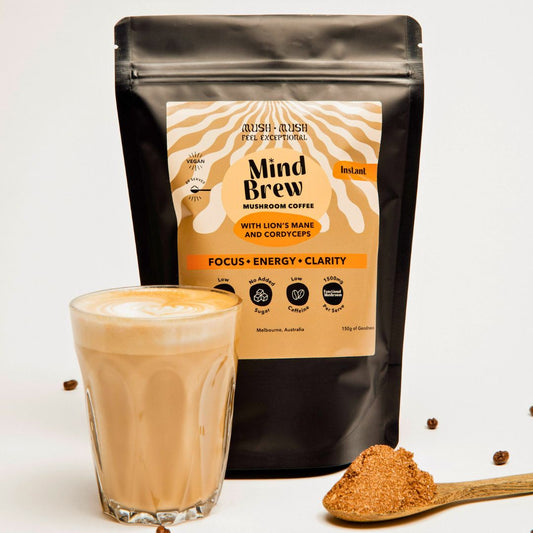
The best mushroom coffee is one that uses quality coffee, fruiting body extracts, transparent ingredient amounts and clearly explains what's inside. MindBrew by Mush Mush has all of these components.
The Mushroom Coffee Lowdown
Mushroom coffee has earned its place in Australia's growing wellness community, not because it's a miracle drink, but because it offers a thoughtful evolution of an everyday ritual.
For many people, it's a way to enjoy the taste and comfort of coffee while incorporating functional mushroom extracts into their daily routine. Others appreciate the lower caffeine levels, smoother energy, or simply the opportunity to try something different.
Like any wellness product, it's important to approach mushroom coffee with realistic expectations. It won't replace healthy habits such as quality sleep, regular movement, good nutrition, and stress management. But when made with high-quality ingredients and consumed consistently, it can become a valuable addition to those habits.
If you're considering trying mushroom coffee, focus less on marketing claims and more on what's actually in the product. Look for transparent ingredient lists, quality mushroom extracts, meaningful levels of beta-glucans, and a flavour you'll genuinely enjoy drinking every day.
At the end of the day, the best coffee is the one that fits your lifestyle, supports your goals, and is a ritual you look forward to each morning.
References
[1] Journal of Fungi. Medicinal Mushrooms: Bioactive Compounds and Health Benefits.
[2] International Journal of Medicinal Mushrooms. Traditional Uses of Medicinal Mushrooms.
[3] Molecules. Extraction Techniques for Medicinal Mushroom Bioactives.
[4] Frontiers in Immunology. β-Glucans and Immune Modulation.
[5] Nehlig A. Effects of Coffee and Caffeine on Brain Function.
[6] Journal of Fungi. Current Research on Functional Mushrooms.
[7] Nutrients. Hericium erinaceus and Cognitive Health.
[8] Nutritional Neuroscience. L-Theanine, Caffeine and Attention.
[9] Frontiers in Pharmacology. Cordyceps and Exercise Performance.
[10] Molecules. Ganoderma lucidum: Bioactive Compounds and Health Effects.
[11] Journal of Ethnopharmacology. Antioxidant Properties of Chaga.
[12] Integrative Cancer Therapies. Turkey Tail Mushroom Research.
[13] Molecules. Food Processing and Mushroom Extracts.
[14] European Food Safety Authority. Scientific Opinion on Caffeine Safety.
[15] Journal of Fungi. Fruiting Body vs Mycelium in Functional Mushroom Products.