Biohacking has exploded in recent years, as people look for natural ways to optimise their health, energy, and performance. From intermittent fasting to cold plunges and wearables, the goal is always the same: to feel sharper, stronger, and more resilient.
One of the most effective but underrated tools for biohacking is mushroom stacking — the practice of combining different functional mushrooms to amplify their benefits. While each mushroom has unique properties, stacking allows you to target multiple systems in the body at once, creating a synergy greater than any single extract can provide.
So how does mushroom stacking work, and how can you use it to elevate your daily routine? Let’s dive into the science and strategies.
What is Mushroom Stacking?
Mushroom stacking involves taking two or more functional mushroom extracts together to enhance or broaden their effects. The principle is simple: Lion’s Mane sharpens focus, Cordyceps boosts energy, Reishi calms stress, and Tremella hydrates the skin. By stacking them, you can simultaneously support brain, body, and mood.
This approach is grounded in adaptogen science. Adaptogens, including many mushrooms, work by modulating the stress response system (the HPA axis), balancing immune activity, and regulating cellular energy. Combining them can create a balanced, multi-layered effect rather than overstimulating one pathway (Panossian & Wikman, 2010).

What Are the Best Mushroom Stacks for Biohacking?
1. Focus and Productivity Stack
Lion’s Mane + Cordyceps
-
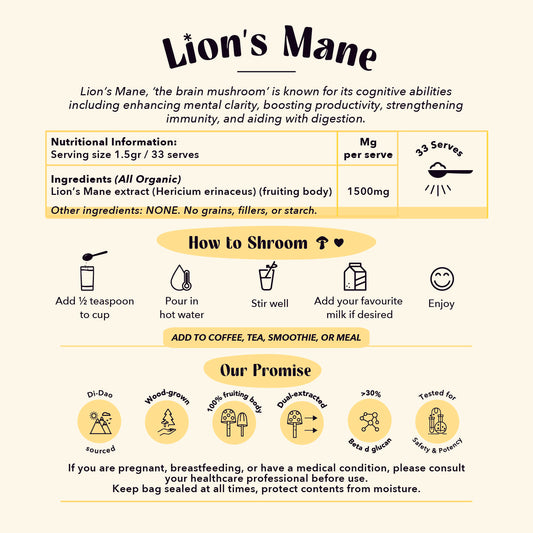
Lion’s Mane (Hericium erinaceus) supports cognitive function by stimulating nerve growth factor (NGF), which helps with memory and learning (Mori et al., 2009).
-
Cordyceps (Cordyceps militaris/sinensis) improves ATP production, supporting cellular energy and stamina (Chen & Xu, 2013).
Together, they provide clean mental clarity and physical energy without jitters — ideal for workdays, study sessions, or training.
2. Calm and Sleep Stack
Reishi + Turkey Tail
-
Reishi (Ganoderma lucidum) contains triterpenes that calm the nervous system, reduce cortisol, and promote restful sleep (Wang et al., 2017).
-
Turkey Tail (Trametes versicolor) enhances immune function with polysaccharopeptides like PSP and PSK, ensuring the body can recover overnight (Bishop et al., 2015).
This stack supports both restorative sleep and immune resilience, making it perfect for winding down in the evenings.
3. Performance and Recovery Stack
Cordyceps + Chaga
-
Cordyceps increases oxygen uptake and delays fatigue, boosting athletic output.
-
Chaga (Inonotus obliquus) is packed with antioxidants such as superoxide dismutase (SOD), which protect cells from exercise-induced oxidative stress (Wasser, 2011).
This pairing is a favourite for athletes and biohackers who want to train harder while recovering faster.
4. Beauty and Hydration Stack
Tremella + Shiitake
-
Tremella (Tremella fuciformis) is known as the “beauty mushroom,” as its polysaccharides hold water in the skin, improving hydration and elasticity (Li et al., 2019).
-
Shiitake (Lentinula edodes) contains antioxidants and compounds like lentinan that support collagen production and immune defence.
This stack supports skin health from the inside out, especially during seasonal changes.
5. Comprehensive Wellness Stack
MultiMush (7 Mushroom Blend)
Sometimes the best biohack is broad-spectrum support. MultiMush combines Lion’s Mane, Reishi, Cordyceps, Chaga, Turkey Tail, Shiitake, and Maitake, offering a full range of cognitive, immune, and energy benefits. It’s a simple way to stack without overthinking, and works well as a baseline for daily wellness.

How Does Mushroom Stacking Compare to Single Extracts?
Single mushrooms are powerful, but stacking creates synergistic effects. For example, Lion’s Mane alone may improve focus, but adding Cordyceps means you also gain physical stamina. Reishi might calm the mind, but pairing it with Turkey Tail adds immune resilience.
This is supported by studies on multi-mushroom formulas, which often show broader benefits than isolated extracts. A review of medicinal mushroom combinations found enhanced effects on immunity, inflammation, and energy regulation compared to single compounds (Wasser, 2011).
How Do You Incorporate Mushroom Stacks into a Routine?
-
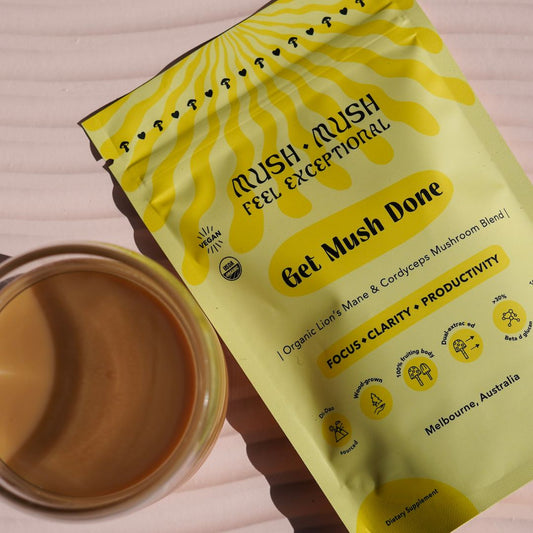
Morning: Lion’s Mane + Cordyceps for focus and energy.
-
Afternoon: MultiMush for balanced daily support.
-
Evening: Reishi + Turkey Tail for relaxation and recovery.
-
Pre-Workout: Cordyceps + Chaga for endurance and protection.
-
Skin Health: Tremella + Mush Lush blend for hydration and glow.
Consistency is key. Most studies show functional mushrooms are most effective when taken daily for at least 4–6 weeks.
Are There Risks with Mushroom Stacking?
Functional mushrooms are generally safe, especially when grown organically and tested for purity. Some people may experience mild digestive changes when starting, but these typically settle with consistent use. Always consult a health professional if you have underlying conditions or are taking immune-related medications.
In Summary
Mushroom stacking is one of the smartest ways to biohack your body and mind. By combining functional mushrooms, you can target multiple pathways at once: sharpen focus, sustain energy, calm stress, improve recovery, and even support skin health. For beginners, start with simple stacks like Lion’s Mane + Cordyceps or Reishi + Turkey Tail, and build from there. For an all-in-one solution, blends like MultiMush or Mush Perform provide comprehensive stacking without the guesswork.
References
-
Mori, K., Inatomi, S., Ouchi, K., Azumi, Y., & Tuchida, T. (2009). Improving effects of the mushroom Yamabushitake (Hericium erinaceus) on mild cognitive impairment. Phytotherapy Research, 23(3), 367–372. Link
-
Chen, S., & Xu, J. (2013). Cordyceps militaris: A review of its chemical constituents and pharmacological properties. Phytotherapy Research, 27(6), 795–801. Link
-
Wang, X., Zhang, Y., Li, Y., Yang, X., & Wang, L. (2017). A review of the medicinal uses, pharmacology, and toxicology of Ganoderma lucidum. Mycology, 8(2), 121–131. Link
-
Wasser, S. P. (2011). Medicinal mushroom science: Current perspectives, advances, evidences, and challenges. Applied Microbiology and Biotechnology, 89(5), 1323–1332. Link
-
Bishop, K. S., Kao, C. H., Xu, Y., Glucina, M. P., Paterson, R. R., & Ferguson, L. R. (2015). From 2000 years of Ganoderma lucidum to recent developments in nutraceuticals. Phytochemistry, 114, 56–65. Link
-
Li, Y., Zhang, J., Xu, D., & Liu, H. (2019). The role of Tremella polysaccharides in moisture retention and skin health. International Journal of Biological Macromolecules, 135, 1202–1210. Link
-
Panossian, A., & Wikman, G. (2010). Effects of adaptogens on the central nervous system and the molecular mechanisms associated with their stress—protective activity. Pharmaceuticals, 3(1), 188–224. Link