Libido is often talked about as a simple on or off switch, but in reality it is influenced by a complex mix of energy levels, stress, circulation, hormones, and nervous system balance.
When libido dips, it is rarely about desire alone. Fatigue, poor recovery, chronic stress, and low physical stamina all play a role. This is where Cordyceps enters the conversation.
Cordyceps is a functional mushroom traditionally used to support vitality, endurance, and reproductive health. Modern research is now beginning to explain why it has earned that reputation.
What is Cordyceps?
Cordyceps is a genus of medicinal mushrooms, most commonly Cordyceps militaris and Cordyceps sinensis. In traditional Chinese medicine, Cordyceps has long been associated with vitality, longevity, and sexual health.
Historically, it was used to support kidney and lung function, both of which are considered foundational to reproductive energy in traditional systems. Today, scientific interest focuses on how Cordyceps influences energy production, blood flow, and hormonal pathways.

Energy, fatigue, and sexual desire
One of the most common reasons libido declines is simple exhaustion.
Sexual desire requires physical energy. When the body is fatigued, stressed, or struggling to recover, libido is often one of the first things to drop.
Cordyceps is best known for its role in supporting ATP production. ATP is the primary energy currency of the body. Research suggests Cordyceps may help improve how efficiently cells produce and use energy, particularly under physical stress.
This is why Cordyceps is often studied in the context of exercise performance and endurance. Improved physical energy and reduced fatigue can indirectly support libido by making the body feel more capable and responsive.
Blood flow and sexual function
Healthy sexual function relies heavily on circulation.
Adequate blood flow supports arousal, sensitivity, and performance in both men and women. Some research suggests Cordyceps may support nitric oxide pathways and vascular function, which play a role in blood vessel relaxation and circulation.
By supporting healthy circulation, Cordyceps may contribute to improved physical responsiveness and sexual satisfaction, particularly in individuals whose libido is affected by low energy or reduced blood flow.

Hormonal support and libido
Hormones play a key role in sexual desire, but they do not operate in isolation.
Stress hormones like cortisol can suppress libido by interfering with sex hormone production and nervous system balance. Cordyceps has been studied for its adaptogenic properties, meaning it may help the body respond more effectively to stress.
Some animal and early human studies suggest Cordyceps may support testosterone production and reproductive hormone balance, particularly under conditions of physical or metabolic stress. While this research is still emerging, it aligns with Cordyceps’ traditional use as a vitality-supporting mushroom.
Importantly, Cordyceps does not act like a stimulant or hormone replacement. Its effects appear to be supportive rather than forceful.
Stress, nervous system balance, and desire
Libido is not just physical. It is deeply connected to the nervous system.
When the body is in a constant state of stress, the nervous system prioritises survival over reproduction. Desire often takes a back seat.
Cordyceps is thought to support resilience rather than stimulation. By helping the body adapt to physical and mental stress, it may create conditions where desire can return naturally rather than being pushed.
This is especially relevant for people experiencing stress-related low libido rather than hormonal disorders.

What Cordyceps does not do
It is important to be clear about expectations.
Cordyceps is not an instant aphrodisiac. It does not create immediate sexual desire or act like pharmaceutical libido enhancers. Its benefits are subtle, cumulative, and tied to overall vitality.
People who report positive effects often notice improvements in energy, stamina, and overall wellbeing first. Libido changes tend to follow as the body becomes more balanced and resilient.
How Cordyceps fits into a modern wellness routine
Cordyceps is most effective when used consistently and as part of a broader wellness approach.
Sleep, nutrition, movement, and stress management all influence sexual health. Cordyceps can support these foundations, but it works best when the basics are in place.
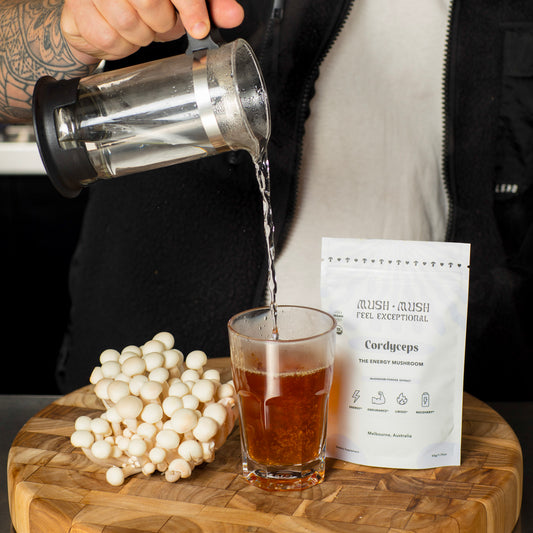
For many people, Cordyceps is easiest to integrate through daily drinks or blends rather than standalone supplements, making consistency more achievable.
A grounded approach to libido support
Low libido is common, complex, and nothing to be ashamed of. Addressing it requires patience and a whole-body perspective rather than quick fixes.
Cordyceps offers a science-supported way to support energy, circulation, and stress resilience, all of which play meaningful roles in sexual health. While it is not a magic solution, it can be a valuable part of a long-term approach to vitality and wellbeing.
References
Cordyceps and cellular energy metabolism (Journal of Alternative and Complementary Medicine)
Effects of Cordyceps on exercise performance and fatigue (Journal of Ethnopharmacology)
Nitric oxide pathways and vascular function (Nitric Oxide Journal)
Adaptogens and stress response regulation (Pharmacological Reviews)