Mushroom coffee has become a daily ritual for many people looking for calmer energy and better focus. But once you start enjoying how it feels, a very reasonable question comes up.
Can I drink mushroom coffee every day?
The short answer is yes, for most people. But as with anything you consume daily, it helps to understand how it works, what to watch out for, and how to use it responsibly.
This guide breaks down the safety, side effects, and long-term considerations of drinking mushroom coffee regularly.
What makes mushroom coffee different from regular coffee
Traditional coffee delivers a high dose of caffeine that stimulates the nervous system. For some people, this works fine. For others, it leads to anxiety, jitters, digestive discomfort, energy crashes, and disrupted sleep.
Mushroom coffee combines coffee with functional mushrooms and typically contains less caffeine than standard coffee. Instead of relying only on stimulation, it supports energy, focus, and stress regulation more gently.
This difference is what makes daily use possible for many people who struggle with regular coffee.

Is it safe to drink mushroom coffee every day?
For healthy adults, drinking mushroom coffee daily is generally considered safe when consumed in normal amounts.
Functional mushrooms like Lion’s Mane, Cordyceps, Reishi, Turkey Tail, and Chaga have long histories of traditional use and are widely studied in modern research. When used at appropriate doses, they are not habit-forming and do not create dependency.
The key factors for safety are quality, dosage, and consistency.
High-quality products use properly extracted mushrooms and clearly list their ingredients. Low-quality products may contain very small amounts of mushrooms or use fillers that do not offer the same benefits.
How much mushroom coffee is too much?
Most people do well with one to two cups per day.
If your mushroom coffee contains caffeine, the total daily caffeine intake still matters. Even low-caffeine mushroom coffee should be factored into your overall caffeine consumption.
For many people, one cup in the morning or a swap for their second coffee is ideal. Drinking it late in the day may still affect sleep if you are sensitive to caffeine, even at lower levels.
Listening to your body is more important than following a rigid rule.
Possible side effects to be aware of
Mushroom coffee is generally well tolerated, but some people may experience mild side effects, especially when starting out.
Digestive changes can occur as your gut adjusts, particularly if you are sensitive or new to functional mushrooms. This usually settles within a few days.
Caffeine sensitivity can still show up if you are highly sensitive, even with lower caffeine levels.
Certain mushrooms, such as Chaga, naturally contain oxalates. People with kidney conditions or a history of kidney stones should speak with a healthcare professional before regular use, although we always suggest everyone consults their professional prior to use.
If you are pregnant, breastfeeding, immunocompromised, or taking medications, it is always best to check with a qualified healthcare provider before adding new supplements or functional foods.

Does mushroom coffee affect sleep?
Many people report improved sleep after switching from regular coffee to mushroom coffee. This is often due to lower caffeine intake and reduced nervous system overstimulation.
That said, mushroom coffee still contains caffeine if it includes coffee. Drinking it late in the afternoon or evening may interfere with sleep for some people.
If sleep is a priority, most people find mushroom coffee works best earlier in the day, with non-caffeinated mushroom drinks reserved for the evening.
Can you build tolerance to mushroom coffee?
Unlike stimulants, functional mushrooms do not work by forcing a response from the nervous system. They support balance rather than overriding natural signals.
Because of this, tolerance is far less common than with caffeine alone. Many people find that the benefits of mushroom coffee feel more stable over time rather than fading.
Consistency matters more than increasing dosage.
Where Mind Brew fits into daily use
Mind Brew was designed to be used daily.
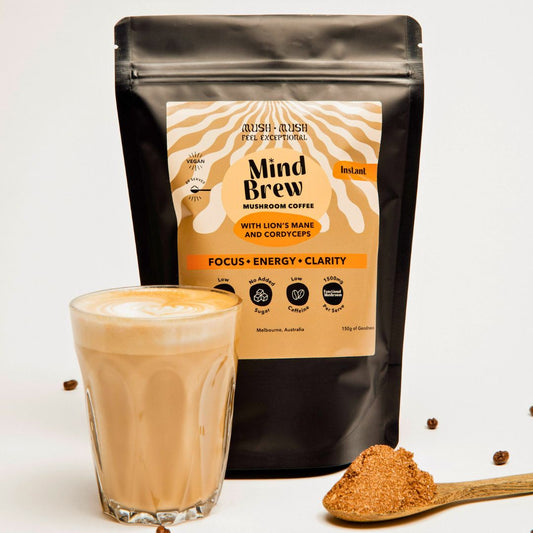
It combines organic Arabica coffee with Lion’s Mane and Cordyceps, delivering calm focus and steady energy with roughly half the caffeine of a standard coffee.
For daily use, most people find success by:
Replacing their first coffee
Swapping their second cup
Using it as a focused work ritual
The goal is not to drink more coffee, but to feel better with less.
The bottom line on daily mushroom coffee
For most people, drinking mushroom coffee every day is safe and can be beneficial when used mindfully.
The biggest benefits come from consistency, quality ingredients, and using it as part of a balanced routine rather than a quick fix.
If you are looking for a way to support focus, energy, and productivity without relying on constant stimulation, mushroom coffee can be a sustainable daily choice.
As always, your body is the best guide.
References
Adaptogens and stress response regulation in humans (Pharmacological Reviews)
Caffeine sensitivity, anxiety, and nervous system stimulation (Frontiers in Psychiatry)